Patterned Decorative Tape Strips: Integrating High-Contrast Assets into Modern Design Workflows
In the fast-paced environment of digital content creation, efficiency often hinges on the quality and versatility of your asset library. Patterned Decorative Tape Strips represent more than just aesthetic embellishments; they are functional design elements that can streamline the visual hierarchy of a project. Whether you are a marketer assembling a social media campaign, an educator creating engaging handouts, or a small business owner packaging products, having reliable, high-quality graphical assets is crucial. The specific collection featuring six black and white decorative tape strips offers a streamlined solution for professionals who need immediate, scalable, and clean visual accents without the overhead of custom illustration.
The Strategic Value of Black and White Line Art
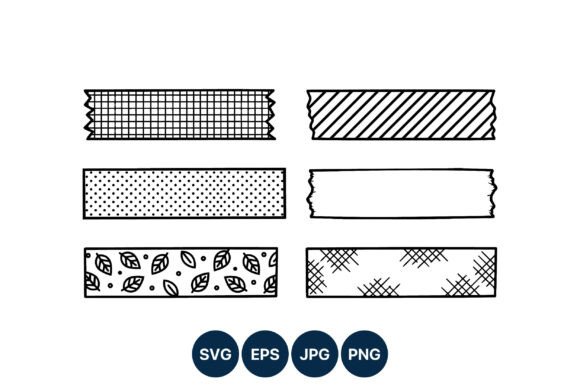
When integrating visual elements into a broader workflow, color can sometimes become a distraction or a compatibility issue. Black and white line art provides a neutral foundation that adapts seamlessly to any brand palette. The six distinct patterns included in this set—grids, diagonal stripes, dots, wavy edges, leaves, and crisscross lines—cover a wide spectrum of design needs. This variety ensures that you are not limited to a single aesthetic, allowing for greater creative flexibility during the execution phase of a project.
The high-contrast nature of these assets makes them particularly effective for readability and visual impact. In educational materials, for instance, clear boundaries defined by grid or stripe patterns can help segment information, making complex data easier to digest for students. For entrepreneurs, these patterns can serve as subtle branding elements on invoices, business cards, or packaging labels, adding a touch of professionalism without overwhelming the primary message. By choosing monochrome assets, you eliminate the time-consuming process of color matching and adjustment, allowing you to focus on layout and messaging.
Technical Compatibility and File Format Versatility
A common bottleneck in creative workflows is dealing with incompatible file types or low-resolution images that pixelate when scaled. This download addresses those technical friction points by providing a comprehensive ZIP folder containing SVG, PNG, JPG, and EPS files. Understanding how to leverage each format is key to maximizing efficiency.
- SVG (Scalable Vector Graphics): Ideal for web design, app interfaces, and digital presentations. SVGs remain crisp at any size because they are code-based rather than pixel-based. This is essential for responsive design where elements must adapt to different screen dimensions.
- EPS (Encapsulated PostScript): The standard for professional printing. If you are sending files to a commercial printer for brochures, posters, or product packaging, EPS ensures that the vector paths remain editable and sharp, regardless of the final output size.
- PNG (Portable Network Graphics): Perfect for digital documents, social media graphics, and overlays. The transparent background allows you to place the tape strips over photos or colored backgrounds without unsightly white boxes around the edges.
- JPG (Joint Photographic Experts Group): Useful for quick previews or platforms that do not support transparency. While less flexible than PNG or SVG, it is universally compatible and easy to share.
Having access to 100 vector SVG and EPS files means you are equipped for both immediate digital use and long-term print applications. This dual capability reduces the need to source separate assets for different mediums, consolidating your resource management and saving valuable time.
Integrating Tape Strips into Your Creative Process
To effectively incorporate Patterned Decorative Tape Strips into your work, consider where they fit in your project lifecycle. They are not merely afterthoughts but can be integral to the planning and structuring phases.
Pre-Production and Planning
During the brainstorming or wireframing stage, these assets can help visualize layout structures. Using the grid or crisscross patterns, you can mock up sections of a webpage or a newsletter to determine balance and spacing. Because the files are vectors, you can manipulate them quickly in design software like Adobe Illustrator, Affinity Designer, or even free tools like Inkscape. This rapid prototyping capability allows you to test multiple design directions without committing to detailed illustrations early on.
Execution and Enhancement
As you move into the production phase, the decorative tapes serve as binding elements. For bloggers and publishers, inserting a wavy edge or leaf pattern between paragraphs can break up text walls, improving reader retention. The diagonal stripes can highlight key quotes or call-to-action buttons, drawing the eye naturally through the content. For educators, these patterns can frame worksheets or separate exam sections, providing clear visual cues that help students navigate the material with less cognitive load.
Post-Production and Quality Control
Before finalizing any project, consistency checks are vital. Since these assets are part of a cohesive set, using multiple patterns from the same collection ensures a unified look. For example, you might use the dot pattern for bullet points and the grid pattern for background textures in a presentation deck. This consistency reinforces brand identity or thematic coherence. Additionally, because the artwork is high-contrast and vector-based, quality control is straightforward. You can zoom in indefinitely to check for alignment issues or unwanted artifacts, ensuring that the final output meets professional standards.
Practical Applications Across Industries
The utility of these decorative strips extends beyond traditional graphic design. Here is how different professionals can leverage them:
- Small Business Owners: Use the EPS files to create custom stickers or labels for product packaging. The black and white aesthetic pairs well with kraft paper or minimalist branding, reducing printing costs while maintaining a premium look.
- Freelancers and Consultants: Enhance proposals and reports with subtle graphical dividers. The crisscross or leaf patterns can add a personal touch to otherwise dry documents, making them more engaging for clients.
- Social Media Managers: Create template backgrounds for Instagram stories or Pinterest pins. The PNG files with transparent backgrounds allow for quick layering over photos, speeding up the content creation process significantly.
- Educators and Trainers: Develop visually appealing handouts and digital slides. The high contrast ensures that materials are accessible and easy to read, even when projected or printed in black and white.
Optimizing Workflow Efficiency
To get the most out of this asset pack, organization is key. Upon downloading the ZIP folder, extract the files into a dedicated directory within your digital asset management system. Tag the files with relevant keywords such as "border," "divider," "minimalist," and "vector" to facilitate quick retrieval. When working in team environments, share the SVG and PNG versions via cloud storage for easy access by collaborators who may not have advanced design software.
Furthermore, consider creating preset templates in your preferred design tools that include these tape strips. For instance, if you regularly create newsletters, save a master file with the wavy edge and grid patterns already positioned. This reduces setup time for each new issue, allowing you to focus on content rather than layout adjustments. Over time, this systematic approach to asset integration leads to significant gains in productivity and consistency.
In conclusion, Patterned Decorative Tape Strips are a versatile tool for anyone involved in visual communication. By offering high-quality, scalable, and diverse patterns in multiple file formats, this collection supports a wide range of professional needs. From enhancing readability in educational materials to adding polish to business branding, these assets fit seamlessly into modern workflows. By understanding their technical properties and strategic applications, you can integrate them effectively, ensuring that your projects are not only visually appealing but also efficient and professionally executed.