Evaluating the Victorian Style Decorative Corner for Professional Design Workflows
In the realm of graphic design and digital publishing, the choice of decorative elements often dictates the perceived value and tone of a project. Among the myriad of stylistic options available, the Victorian Style Decorative Corner stands out as a versatile asset for creators seeking to infuse their work with elegance, tradition, and structural sophistication. This article examines the practical utility, technical specifications, and aesthetic impact of this specific vector ornament, providing an objective analysis for professionals, entrepreneurs, and serious hobbyists who are considering its integration into their creative toolkit.
Understanding the Aesthetic and Functional Role
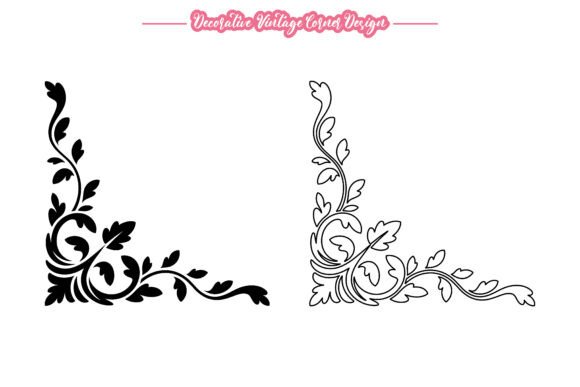
The Victorian era is synonymous with intricate detailing, ornate typography, and a reverence for craftsmanship. A Victorian Style Decorative Corner captures this ethos through elaborate scrollwork, floral motifs, and symmetrical balance. Unlike minimalist modern design elements that rely on negative space, these corners serve as active framing devices. They draw the eye inward, creating a natural focal point for text, logos, or central imagery.
The primary function of such an element is not merely decoration but organization. In layout design, corners provide visual anchors. They define boundaries without the heaviness of a full border, allowing for a sense of openness while maintaining structure. This makes them particularly effective for certificates, invitations, and formal branding materials where authority and refinement are paramount. The dual presentation of solid and outline styles within this package further enhances its utility, offering designers the flexibility to choose between bold emphasis and subtle understatement depending on the background and overall composition.
Technical Specifications and File Versatility
For professional users, the aesthetic appeal of a design asset is secondary to its technical reliability. A beautiful image that cannot be scaled, edited, or printed at high resolution is of limited value in a commercial workflow. This particular Victorian Style Decorative Corner package addresses these concerns through its comprehensive file format inclusion.
- EPS Format: The inclusion of an EPS (Encapsulated PostScript) file is critical for professional workflows. As a vector format, it allows for infinite scalability without loss of quality. Whether the corner is used on a business card or a large-format banner, the lines remain crisp and clean. Furthermore, EPS files are compatible with industry-standard software like Adobe Illustrator, enabling users to modify paths, adjust anchor points, and customize shapes to fit unique layout constraints.
- JPG Format: For users who do not require vector editing capabilities or who are working in raster-based programs like Photoshop or Canva, the included JPG file offers immediate usability. At 300 DPI, it ensures high-quality print output, avoiding the pixelation common in lower-resolution web images.
- Color Mode and Resolution: The assets are provided in RGB color mode at 300 DPI. While CMYK is traditionally preferred for offset printing, RGB is standard for digital displays and many modern digital printing services. The high resolution ensures that even when converted or used in mixed-media projects, the detail remains sharp.
- Editability: With 100 editable, color-changeable vector shapes, the asset offers significant customization potential. Designers are not locked into a single black-and-white scheme. The ability to alter colors to match brand guidelines or thematic palettes is a crucial feature for maintaining consistency across marketing materials.
Practical Applications Across Industries
The versatility of the Victorian Style Decorative Corner allows it to serve a wide range of industries and project types. Its effectiveness lies in its ability to elevate standard templates into bespoke designs.
Branding and Corporate Identity
For businesses in sectors such as law, finance, luxury hospitality, or heritage brands, trust and tradition are key selling points. Incorporating Victorian-style elements into letterheads, business cards, and logo framing can subtly communicate stability and prestige. The scrollwork adds a layer of sophistication that minimalist logos may lack, appealing to demographics that value classic aesthetics.
Event Planning and Stationery
Weddings, galas, and formal ceremonies often require invitations and programs that reflect the gravity and joy of the occasion. These corners are ideal for framing event details, creating a cohesive look across save-the-dates, menus, and place cards. The elegant scrollwork complements serif typography commonly used in formal stationery, creating a harmonious visual hierarchy.
Publishing and Education
Educators and publishers can utilize these ornaments to enhance textbooks, certificates of achievement, and diplomas. The decorative frame lends an air of officialdom and importance to documents, reinforcing the value of the certification or the educational content. In scrapbooking and DIY crafts, these elements allow hobbyists to create professional-looking layouts without needing advanced illustration skills.
Usability and Workflow Integration
One of the strongest aspects of this asset is its ease of integration into existing workflows. For designers using Adobe Illustrator, the EPS file can be opened directly, allowing for immediate manipulation. The vector nature means that resizing is non-destructive. Users can stretch, rotate, or flip the corners to create complete frames or use them individually for asymmetric layouts.
The availability of both solid and outline versions provides strategic flexibility. Solid fills work well against light backgrounds or when a strong visual boundary is needed. Outline styles are preferable for overlaying images or textured backgrounds, as they allow the underlying content to show through, maintaining visual depth. This duality reduces the need for designers to create multiple variations manually, saving time during the production phase.
However, users should be mindful of overuse. Victorian design is inherently dense. When applying these corners, it is essential to balance them with ample white space and simple typography. Overloading a layout with too many ornate elements can result in visual clutter, diminishing readability and impact. The key to effective use is restraint—letting the corner serve as an accent rather than the dominant feature.
Assessing Long-Term Value and Limitations
When evaluating the long-term value of purchasing a Victorian Style Decorative Corner package, one must consider the trend cycle. While minimalism has dominated design trends for the past decade, there is a growing resurgence of maximalism and vintage aesthetics. Classic styles, by definition, do not go out of style; they evolve. Victorian elements have remained relevant for over a century because they tap into universal associations with quality and heritage. Therefore, this asset is not a fleeting trend purchase but a foundational resource for a designer’s library.
There are, however, limitations to consider. The intricate nature of the scrollwork may not reproduce well at very small sizes, such as on mobile screens or tiny icons. In such cases, simplification or using the outline version at a larger scale is recommended. Additionally, while the RGB color mode is versatile, users preparing files for traditional offset printing should convert the colors to CMYK and check for gamut shifts to ensure accurate color reproduction.
Who Benefits Most from This Asset?
This package is particularly beneficial for:
- Freelance Graphic Designers: Who need quick, high-quality assets to meet client deadlines without sacrificing customizability.
- Small Business Owners: Who manage their own branding and need professional-grade elements to elevate their marketing materials without hiring a dedicated designer.
- Event Planners and Stationers: Who require consistent, elegant themes across multiple paper goods.
- Educators and Administrators: Who produce certificates and formal documents regularly.
For these groups, the combination of vector editability, high-resolution raster options, and classic aesthetic appeal offers a high return on investment. The ability to modify colors and shapes ensures that the asset can adapt to various brand identities, making it a flexible tool rather than a one-time use item.
Final Recommendations for Implementation
To maximize the effectiveness of the Victorian Style Decorative Corner, consider pairing it with complementary typography. Serif fonts with high contrast, such as Bodoni or Garamond, harmonize well with the curves of the scrollwork. Ensure sufficient padding between the corner elements and the text to maintain legibility. When using in digital formats, optimize the file size to ensure fast loading times without compromising visual quality.
In conclusion, this Victorian Style Decorative Corner package represents a robust resource for creators aiming to inject classical elegance into their projects. Its technical specifications meet professional standards, and its aesthetic versatility supports a wide array of applications. By understanding its strengths and applying it with design discipline, users can significantly enhance the visual impact and perceived value of their creative outputs.